


Download App

Apply code FIRST15 in-app to get 15% OFF on your order
Tap to download · PetYard App
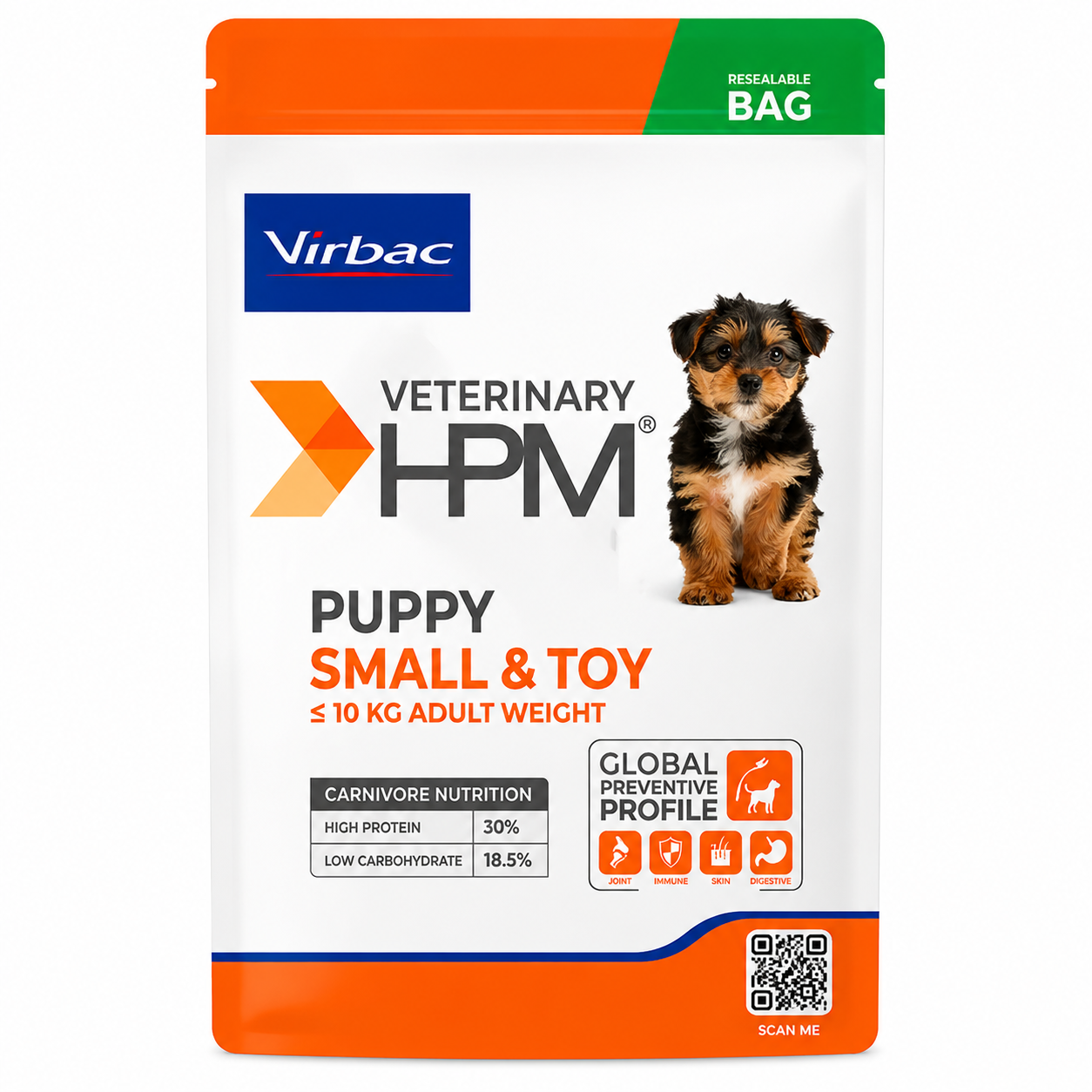
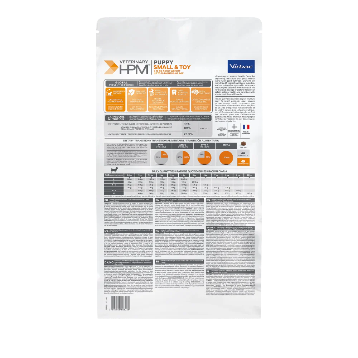
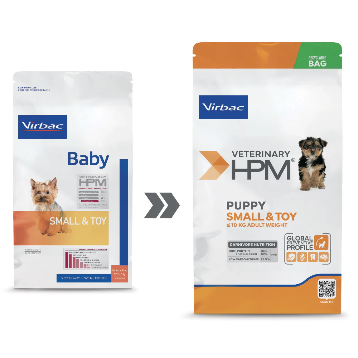
Virbac HPM — Puppy Small & Toy | Veterinary-Grade Dry Puppy Food
The foundation of a healthy small breed life. Virbac HPM Puppy Small & Toy is a veterinary-grade growth diet specifically formulated for the unique nutritional requirements of small and toy breed puppies — the breeds whose rapid early development, high metabolic rate, and small stomach capacity demand a fundamentally different nutritional approach from medium and large breed puppy foods. Small and toy breed puppies are not simply smaller versions of large breed puppies — they grow faster relative to their adult size, reach maturity earlier, burn more calories per kilogram of body weight, and have smaller mouths and stomachs that require smaller kibble and higher energy density per gram of food. Virbac HPM Puppy Small & Toy is formulated to address every one of these specific requirements — high energy density for the small breed metabolic rate, optimal protein for rapid muscle and organ development, precise calcium and phosphorus ratios for small breed skeletal development, DHA for brain and vision development, and a kibble size designed for small mouths. Veterinary-grade nutrition from Virbac — the animal health company that applies pharmaceutical-grade scientific rigor to every product it produces. 3kg — the growth diet that gives small breed puppies the nutritional foundation they deserve.
Why Virbac HPM Puppy Small & Toy Is The Best Choice
- Small & Toy Breed Specific — Formulated specifically for the unique metabolic, developmental, and physical requirements of small and toy breed puppies — not a generic puppy food adapted for small breeds.
- High Energy Density — Small and toy breed puppies have a metabolic rate 2–3× higher per kilogram than large breeds — the high energy density formula meets this elevated caloric requirement in the small portions their stomachs can accommodate.
- Optimal Protein for Rapid Development — High-quality protein supporting the rapid muscle, organ, and tissue development that characterizes the small breed growth phase.
- Precise Calcium & Phosphorus Ratios — Carefully calibrated calcium and phosphorus levels for small breed skeletal development — avoiding the over-supplementation that can cause developmental orthopedic disease.
- DHA for Brain & Vision Development — Docosahexaenoic acid (DHA) is the critical Omega-3 for neurological and retinal development — supporting cognitive development and visual acuity during the critical early growth phase.
- Small Kibble Size — Kibble sized for small mouths and developing teeth — ensuring comfortable eating and adequate chewing for small and toy breed puppies.
- Immune System Support — Antioxidants and immune-supporting nutrients for the developing immune system of growing puppies.
- Digestive Support — Highly digestible ingredients and prebiotic fiber supporting the sensitive digestive system of small breed puppies.
- Virbac HPM — Veterinary Expertise — From one of the world's leading animal health companies — veterinary-grade nutrition for the most critical phase of your dog's life.
- Complete & Balanced for Growth — Formulated to meet the AAFCO/FEDIAF nutritional standards for growth — all essential nutrients for complete puppy development.
(Visual asset placement: lifestyle photo of a small or toy breed puppy eating from a bowl of Virbac HPM kibble, or flat-lay of the bag with a small breed puppy alongside — communicating the breed-specific positioning.)
Product Details & Features
Why Small & Toy Breed Puppies Need a Specific Formula The distinction between small/toy breed puppy nutrition and general puppy nutrition is not a marketing differentiation — it reflects genuine, clinically significant differences in the physiology and development of small breed dogs:
Growth rate and maturity timeline:
- Small/toy breeds (adult weight <10 kg) — Reach adult size at 8–12 months
- Medium breeds (adult weight 10–25 kg) — Reach adult size at 12–15 months
- Large breeds (adult weight 25–45 kg) — Reach adult size at 15–18 months
- Giant breeds (adult weight >45 kg) — Reach adult size at 18–24 months
Small and toy breed puppies complete their growth in a shorter period — but their growth is proportionally more rapid relative to their adult size. This rapid growth requires higher energy density and higher protein concentration per gram of food than slower-growing large breed puppies.
Metabolic rate: Small and toy breed dogs have a significantly higher metabolic rate per kilogram of body weight than large breeds — a consequence of their higher surface-area-to-volume ratio (smaller bodies lose heat more rapidly and must generate more heat per kilogram to maintain body temperature). This elevated metabolic rate means:
- Small breed puppies require more calories per kilogram of body weight than large breed puppies
- They must eat more frequently relative to their body size
- Their food must be more energy-dense — they cannot eat enough volume to meet their caloric needs from a low-density food
Stomach capacity: Small and toy breed puppies have proportionally smaller stomachs — they cannot consume large volumes of food at a single meal. A high energy density formula allows them to meet their caloric requirements in the small portions their stomachs can accommodate.
Kibble size: Standard puppy kibble is too large for small and toy breed mouths — making eating difficult, reducing chewing efficiency, and potentially causing choking. Small breed-specific kibble is sized for small mouths and developing teeth.
Calcium and phosphorus requirements: This is the most critical nutritional distinction between small and large breed puppy foods:
- Large breed puppies require carefully restricted calcium and phosphorus — excess calcium in large breed puppies causes developmental orthopedic disease (DOD), including osteochondrosis and hip dysplasia
- Small breed puppies have different calcium and phosphorus requirements — they are not at the same risk of DOD from calcium excess, and their rapid growth requires adequate calcium for skeletal development
Feeding a large breed puppy food to a small breed puppy — or vice versa — can result in inappropriate calcium and phosphorus levels for that breed's developmental requirements.
The Key Developmental Nutrients
DHA — Brain and Vision Development: DHA (docosahexaenoic acid) is the most critical nutrient for neurological and retinal development in puppies:
- Brain development — DHA is a structural component of brain tissue — it is incorporated into neuronal cell membranes during the critical early development phase, supporting the formation of neural connections and cognitive capacity
- Vision development — DHA is a structural component of the retina — adequate DHA during development supports visual acuity and the development of normal vision
- Learning and trainability — Studies in puppies have shown that adequate DHA intake during development is associated with improved learning ability and trainability — a particularly relevant benefit for small breed puppies who are often trained as companion dogs
The Virbac HPM Puppy Small & Toy formula provides DHA from fish-derived sources — the most bioavailable form of DHA for puppies.
High-Quality Protein — Muscle and Organ Development: The rapid growth of small breed puppies requires high-quality, highly digestible protein:
- Muscle development — Adequate protein provides the amino acids required for muscle fiber synthesis during the rapid growth phase
- Organ development — The heart, liver, kidneys, and other organs develop rapidly during puppyhood — requiring adequate protein for tissue synthesis
- Immune system development — Antibodies and immune cells are proteins — adequate protein intake supports the development of the immune system
- Leucine — The primary trigger for muscle protein synthesis — high-quality animal protein sources provide leucine in the concentrations required for optimal muscle development
Calcium & Phosphorus — Skeletal Development: The skeleton of a small breed puppy develops rapidly during the first 8–12 months — requiring adequate calcium and phosphorus in the correct ratio:
- Calcium — The primary mineral component of bone — adequate calcium supports bone density and strength
- Phosphorus — Works synergistically with calcium for bone mineralization
- Calcium:Phosphorus ratio — The ratio of calcium to phosphorus is as important as the absolute amounts — the Virbac HPM formula maintains the optimal ratio for small breed skeletal development
Antioxidants — Immune System Development: The developing immune system of a puppy requires antioxidant support:
- Vitamin E — Supports the development and function of immune cells
- Vitamin C — Supports immune cell production and collagen synthesis
- Beta-carotene — Supports immune function and vision development
- Selenium — Antioxidant mineral supporting immune function
Prebiotic Fiber — Digestive Development: Small breed puppies have sensitive digestive systems that benefit from prebiotic fiber support:
- Feeds beneficial gut bacteria — supporting healthy gut microbiome development
- Regulates gut transit — preventing the diarrhea that commonly affects puppies during dietary transitions
- Supports gut barrier integrity — reducing the risk of pathogen penetration during the period before full immune maturity
The Small & Toy Breed Growth Timeline Understanding the growth phases of small and toy breed puppies helps optimize the feeding program:
| Age | Development Phase | Key Nutritional Priority |
|---|---|---|
| Birth–8 weeks | Neonatal/maternal | Mother's milk (colostrum for immunity) |
| 8–16 weeks | Rapid growth | Maximum energy density; DHA; protein |
| 4–6 months | Continued growth | Sustained energy; calcium; protein |
| 6–10 months | Growth completion | Transition to adult food approaching |
| 10–12 months | Adult transition | Begin transitioning to adult formula |
Small and toy breed puppies should transition to adult food at approximately 10–12 months — earlier than medium or large breeds.
When to Transition to Adult Food Small and toy breed puppies reach adult size significantly earlier than larger breeds — and continuing to feed puppy food beyond the growth phase can contribute to obesity:
- Toy breeds (<4 kg adult weight) — Transition at 9–10 months
- Small breeds (4–10 kg adult weight) — Transition at 10–12 months
(Visual asset placement: lifestyle photo of a small or toy breed puppy (Chihuahua, Pomeranian, Maltese, Shih Tzu, Yorkshire Terrier, Miniature Pinscher) eating from a bowl of Virbac HPM kibble — communicating the breed-specific positioning and the health of a well-nourished puppy.)
Specifications & Feeding
| Specification | Details |
|---|---|
| Brand | Virbac HPM |
| Product Name | Puppy Small & Toy |
| Format | Dry dog food (kibble) |
| Net Weight | 3kg |
| Life Stage | Puppy — growth phase |
| Breed Size | Small breeds (<10 kg adult weight) and toy breeds (<4 kg adult weight) |
| Key Features | High energy density, small kibble, DHA, optimal Ca:P ratio, prebiotic fiber |
| Nutritional Standard | Complete & balanced — growth (puppy) |
| Suitable For | Small and toy breed puppies from weaning to 10–12 months |
| Brand Origin | France (Virbac) |
Feeding Guidelines
| Puppy Weight | 2 months | 4 months | 6 months | 8 months |
|---|---|---|---|---|
| 1 kg (adult ~2 kg) | 35g | 30g | 25g | 20g |
| 2 kg (adult ~4 kg) | 55g | 50g | 45g | 40g |
| 3 kg (adult ~6 kg) | 75g | 70g | 60g | 55g |
| 5 kg (adult ~10 kg) | 110g | 100g | 90g | 80g |
Divide daily amount into 3–4 meals for puppies under 4 months; 2–3 meals for puppies 4–12 months. Always provide fresh water. Adjust based on body condition — puppies should be lean but not thin.
Transition Guidelines When introducing Virbac HPM Puppy Small & Toy:
| Day | Previous Food | Virbac HPM |
|---|---|---|
| 1–2 | 75% | 25% |
| 3–4 | 50% | 50% |
| 5–6 | 25% | 75% |
| 7+ | 0% | 100% |
Serving Tips
- Feed 3–4 times daily for young puppies — Small breed puppies have tiny stomachs and high metabolic rates — frequent small meals prevent hypoglycemia (low blood sugar), which is a genuine risk in toy breed puppies
- Never skip meals for toy breed puppies — Toy breed puppies (especially Chihuahuas, Yorkshire Terriers, Pomeranians) are at risk of hypoglycemia if meals are delayed — consistent feeding schedules are essential
- Fresh water always — Adequate hydration supports kidney development and overall health
- Monitor body condition — Puppies should be lean but not thin — ribs should be easily felt but not prominently visible
- Transition to adult food at 10–12 months — Do not continue puppy food beyond the growth phase
The Complete Virbac HPM Range at petyard
| Product | Life Stage / Indication | Key Feature |
|---|---|---|
| Puppy Small & Toy 3kg | Growth — small/toy breeds | High energy density; DHA; small kibble |
| Dog Digestive Support 1.5kg | Adult — digestive disorders | Highly digestible; prebiotic fiber |
| Dog Hypoallergy Hydrolysed Fish 3kg | Adult — food allergy | Hydrolysed protein |
| Dog Weight Loss & Diabetes 3kg | Adult — obesity/diabetes | High protein; low fat; low GI |
Veterinary-Grade Growth Nutrition. Built for Small Breeds. — Backed by petyard
At petyard, Virbac HPM Puppy Small & Toy is the growth diet we recommend for small and toy breed puppy owners who want veterinary-grade nutrition for the most critical phase of their dog's life — high energy density for the small breed metabolic rate, DHA for brain and vision development, optimal calcium and phosphorus for skeletal development, and small kibble for small mouths. Complete and balanced for growth. Virbac's pharmaceutical-grade scientific rigor applied to puppy nutrition. 3kg, delivered fast across Egypt from petyard. Because your small breed puppy's first year is the foundation of their entire life — and Virbac HPM gives them the best possible start.